1960's
A long-standing affiliation with the Silvermine Guild of Artists in New Canaan, Connecticut began when he first exhibited there in 1951. He was later elected to the Board of Trustees and was made a Guild Fellow; the organizations highest honor. By that time, Bernard Riley was established as a major artist in the area.
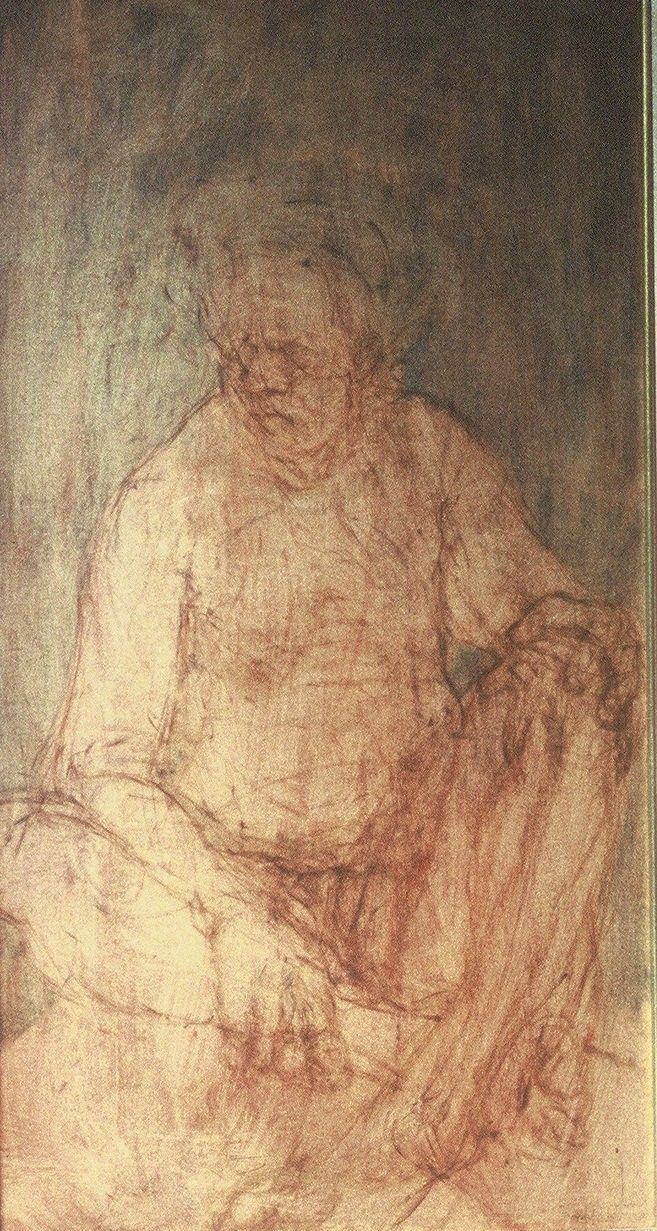
Man on Beach 1960
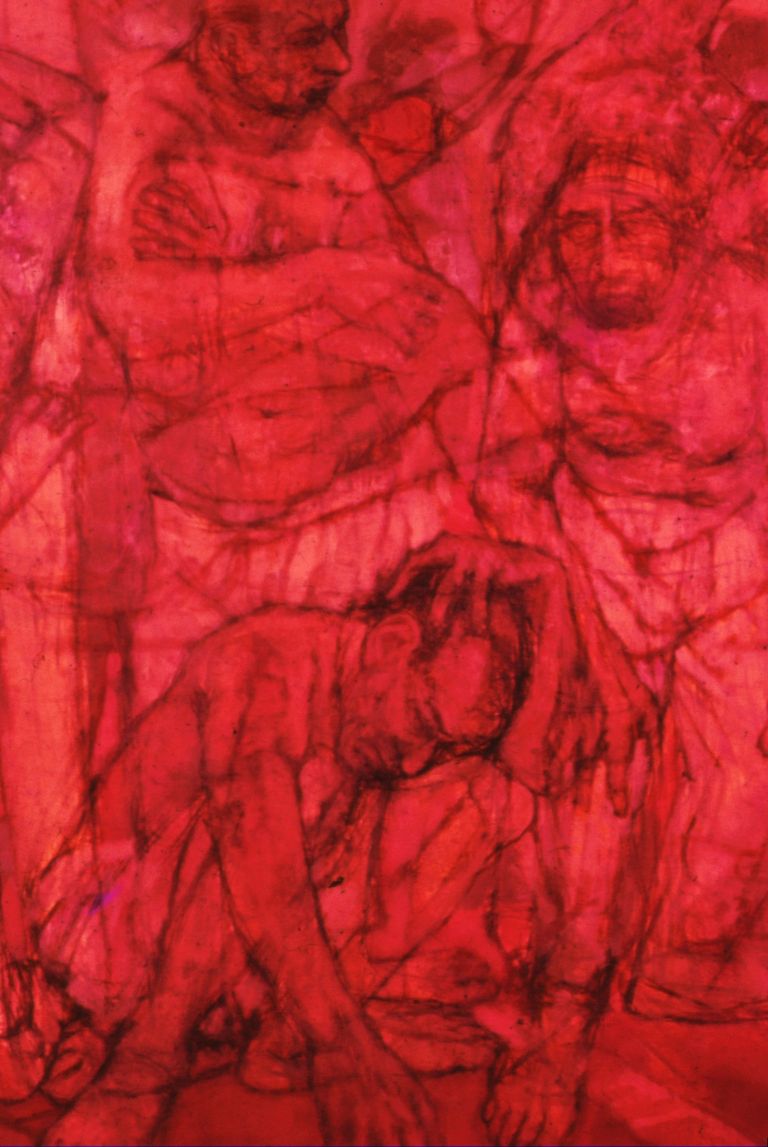
Seven Men Waiting 1960
Painting of men awaiting execution in Cuba shortly after Castro came to power. The painting was purchased by Washington D.C. court.
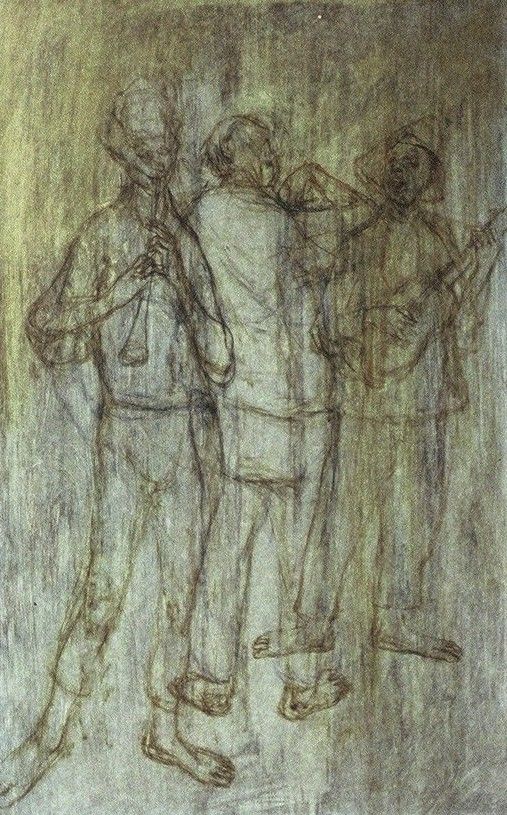
Three Musicians 1960
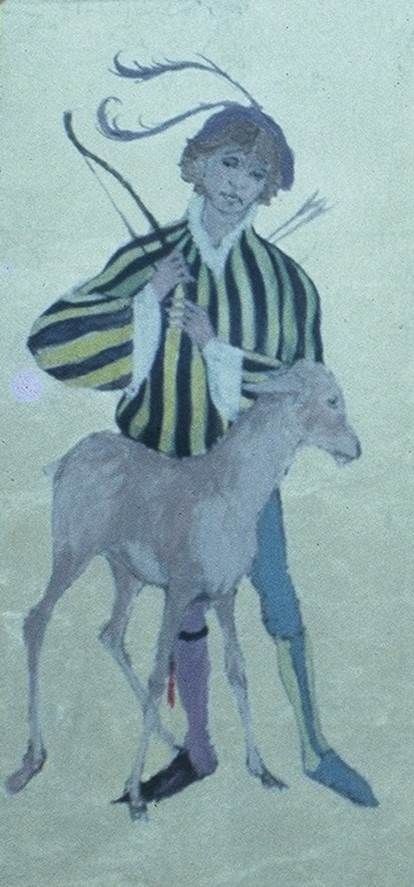
St . Giles and the
Wounded Fawn 1960
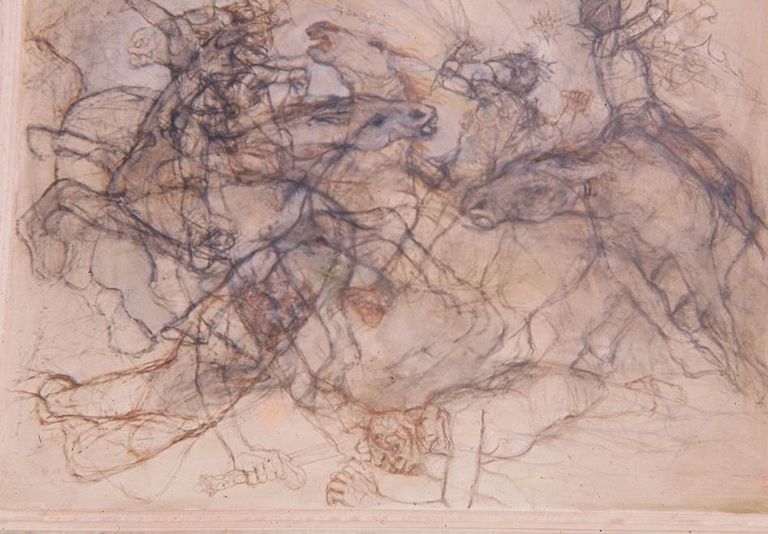
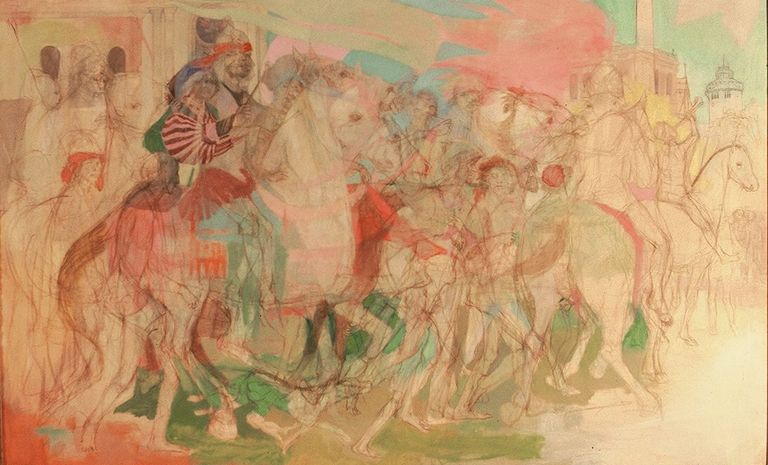
Battle of Anghiari (after Leonardo da Vinci) 1960
Bernard Riley was always interested in art of the Renaissance. He was particularly fascinated by DaVincis Battle of Anghirari. He did several paintings and a woodcut print based on the work. The painting was in the collection of the Metropolitan Museum in New York CityWe pride ourselves on our efficient procedures and solutions, but we continually strive for improvement in order to deliver results more effectively.
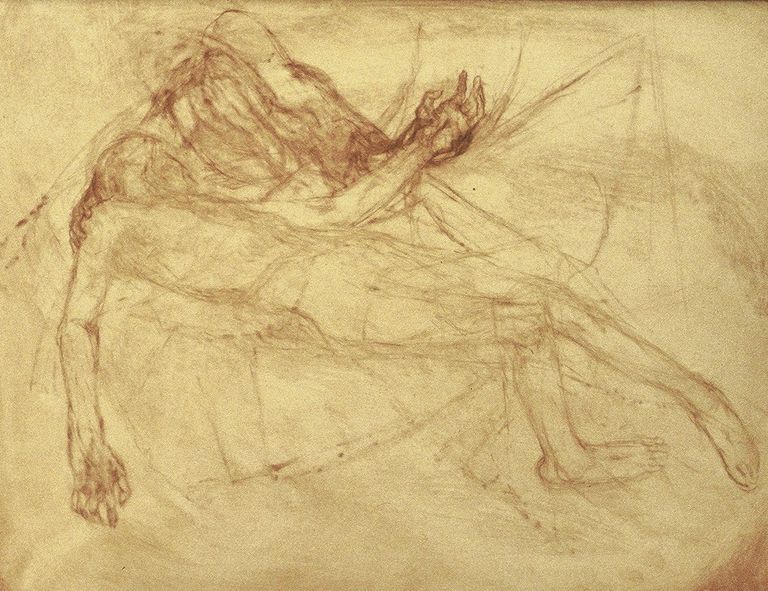
Pieta 1961
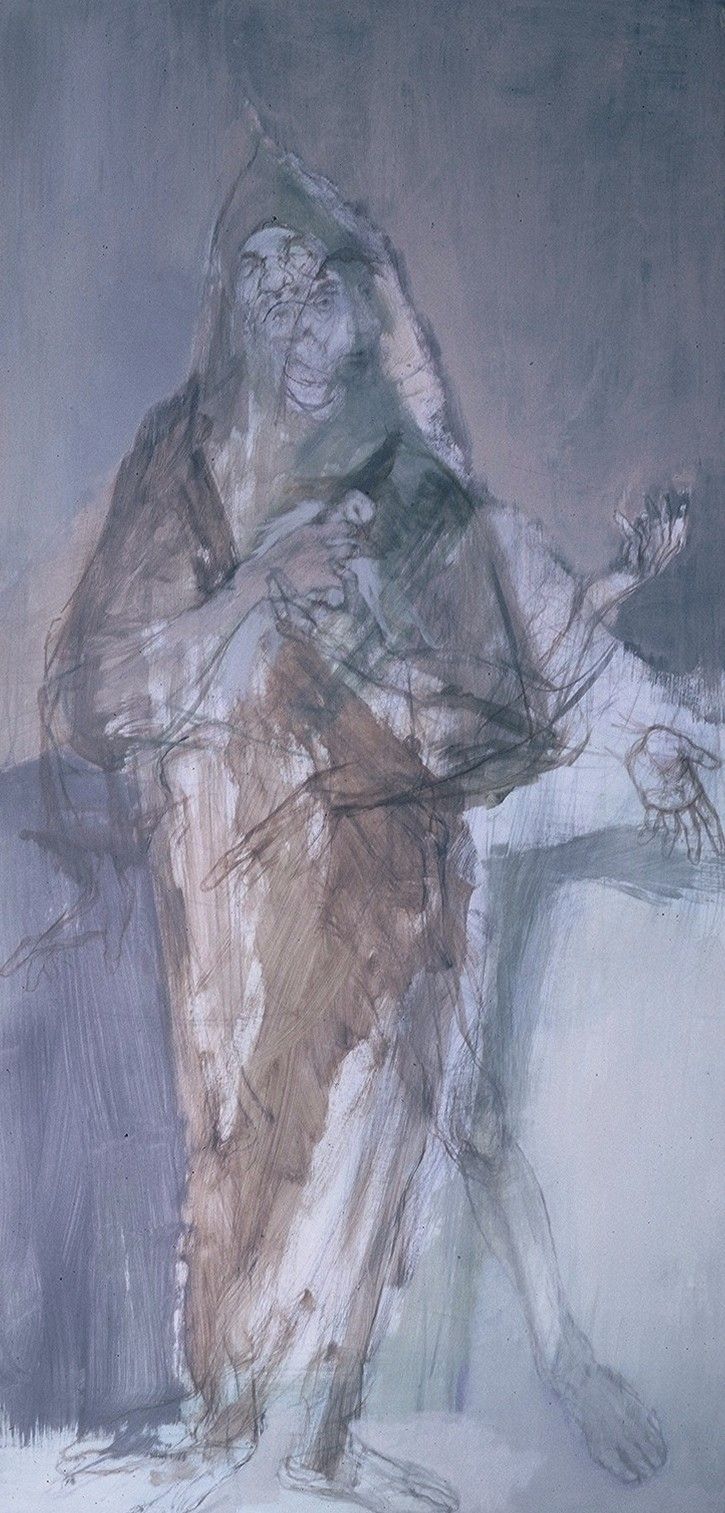
The Poet 1961
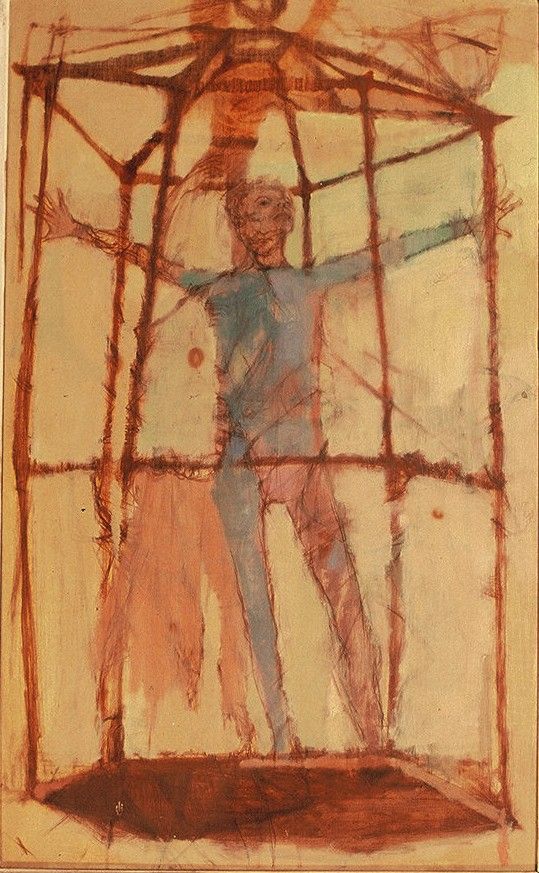
Man in a Cage 1961
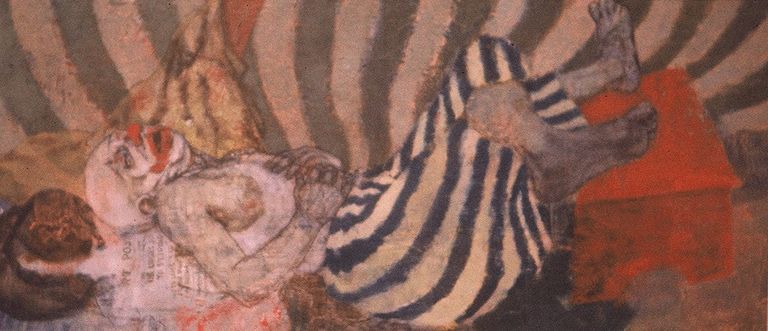
Sleeping Clown, 1960
The reason I was so interested in clowns and Harlequins and that sort of thing is I was born and grew up just within two blocks of the circus winter quarters. The clown always appeared to me to be the earthy smell and character of the circus. He might have been the low man on the totem pole, he might have been the last in the pecking order, but still he had the character of what I felt the circus was all about.
Now here in this case, I feel that this sleeping clown becomes sort of a chameleon. He's absorbed the color surrounding him. The stripes of the tent behind them, the stripes of his trousers, all sort of meld together, and bring him in.
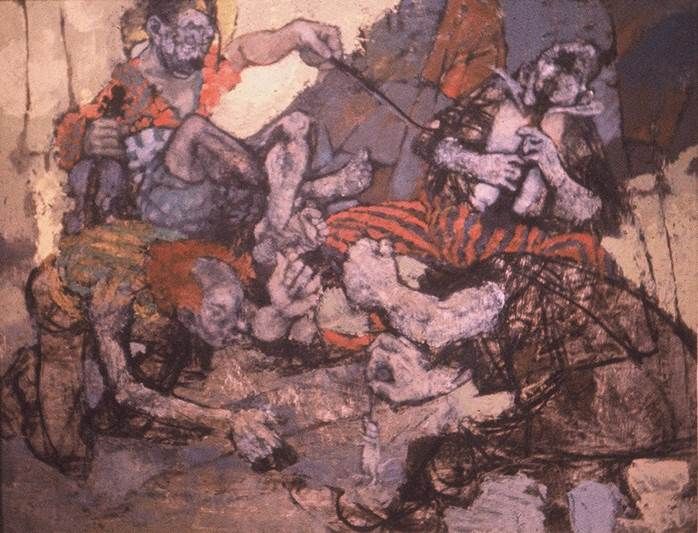
Dancing Mouse, 1960
The clowns I began to create, just simply draw; none of this work has any pre sketching. And there's no pre concept of the content.
The work begins and they're alone. It's sketched out there whatever happens, happens purely by accident.
Now here we had these clowns, the three of them, especially the one in the upper left playing a violin, a very innocent sort of clown person. One that you wouldn't take offence at, one that was a happy sort of person, and the other fellow with the flute. No problem with him. You're not concerned with what he's thinking. The man in the lower left is involved with this rather large, bizarre figure that might not even be a clown, and is dressed in some rather odd clothing. He has large, powerful hands. And from his hands dangled this little innocent mouse.
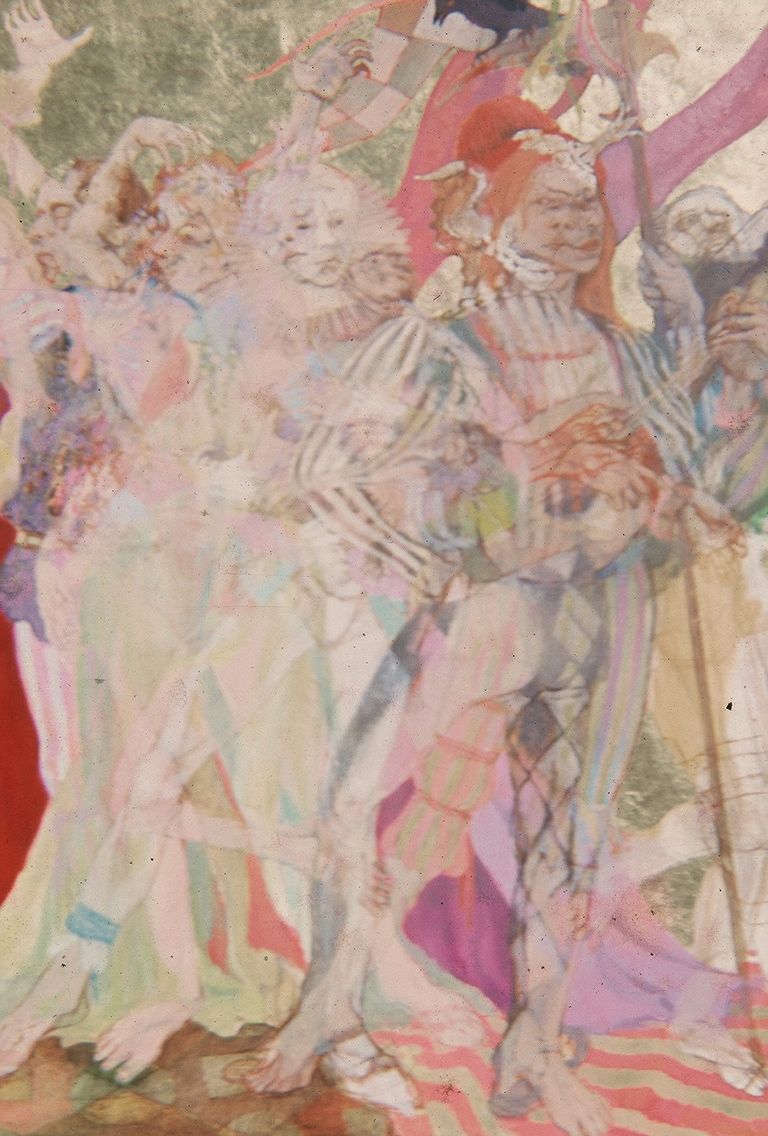
The Players 1962
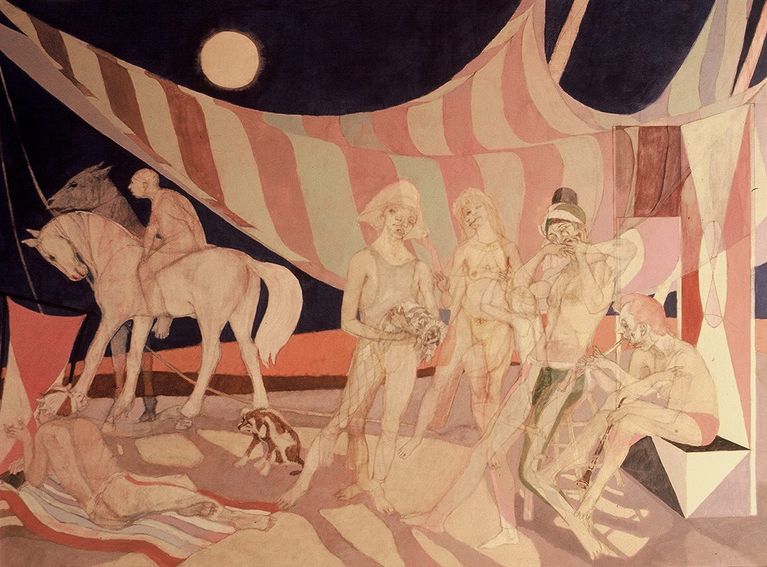
Lament to a Spotted Dog 1960
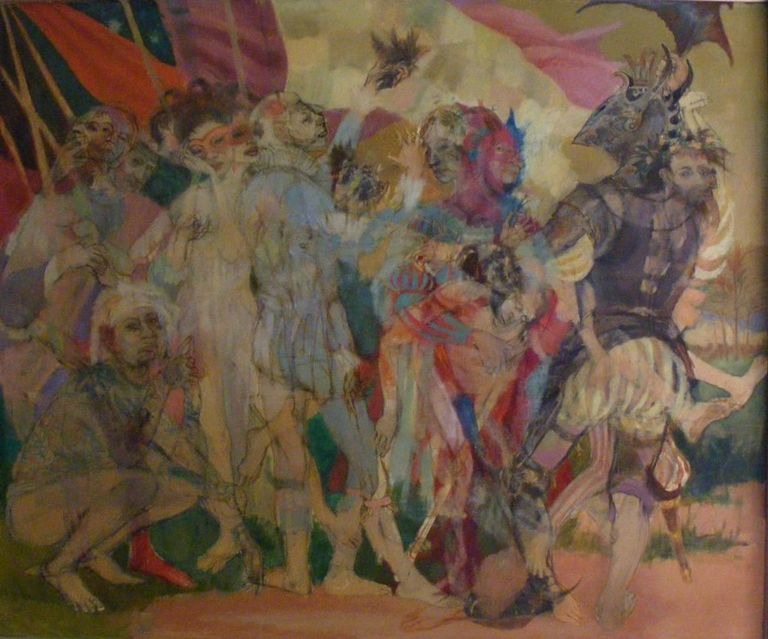
The Man with a Wounded Bird, 1958
This is the first major work involving the Multiple Image technique
As his art matured, he developed a unique style of multiple image. He described it in this manner: "We never really see a person in static form. We remember them in a multiple image. I am attempting to show this difference in time, to get an intellectual depth rather than the depth of a draftsman. The idea of painting pictures with multiple images first came through drawing and correcting. Part of the plan is to create intrigue and excitement. Things tend to be dull when they are static. Here ones curiosity is aroused. What is occurring?
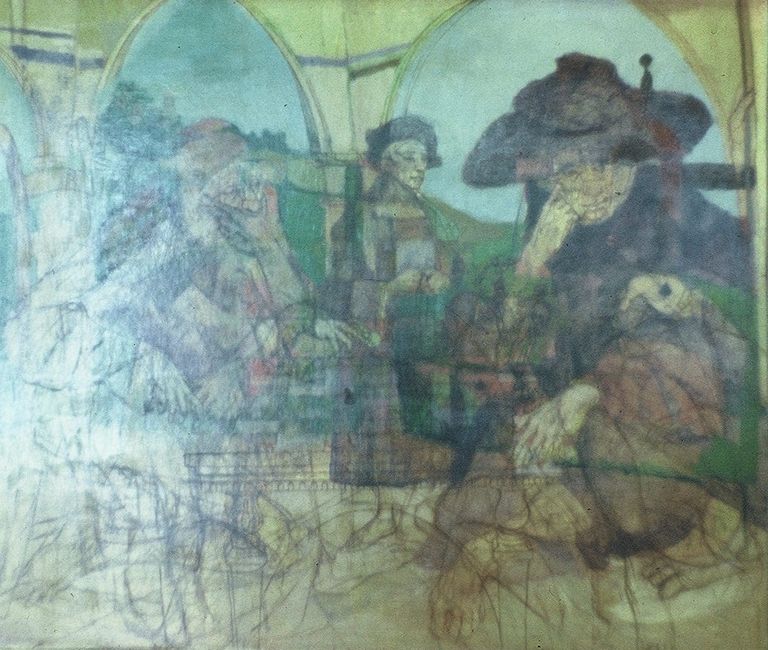
St. Anthony Playing Chess with the Devil 1965
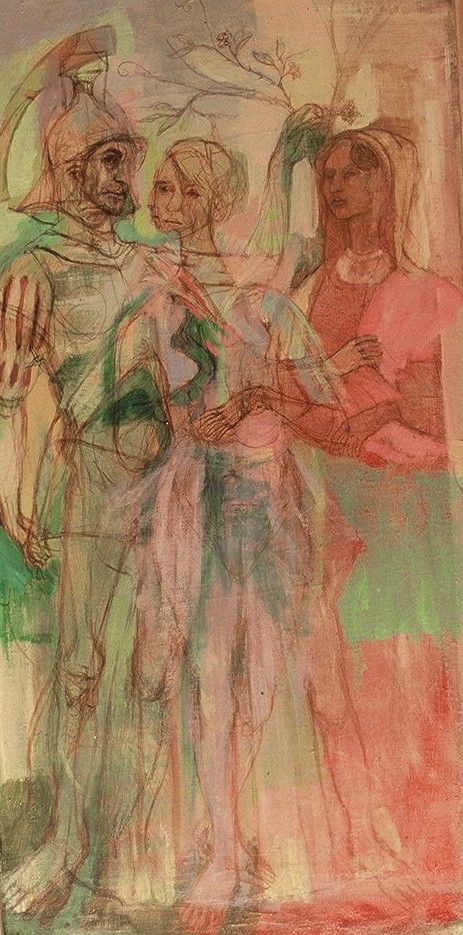
Warrior in the Garden 1965
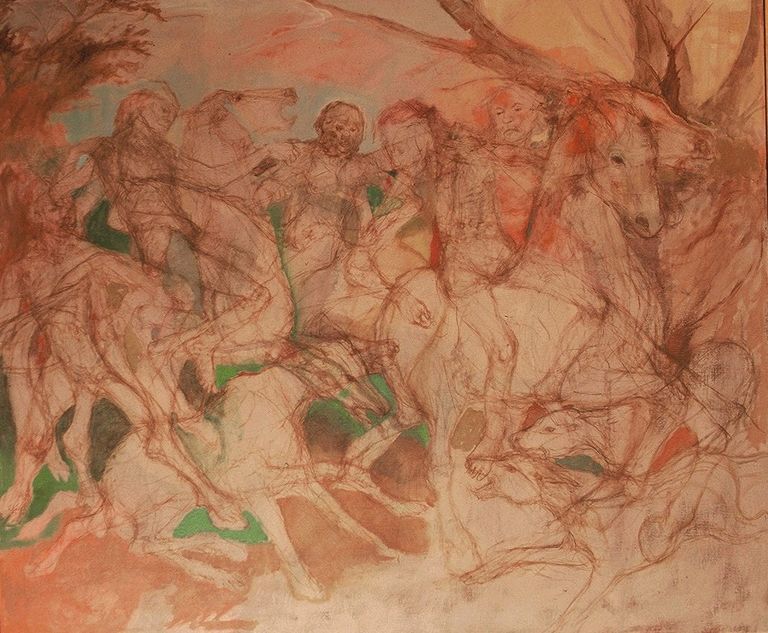
Wolf Hunt 1965
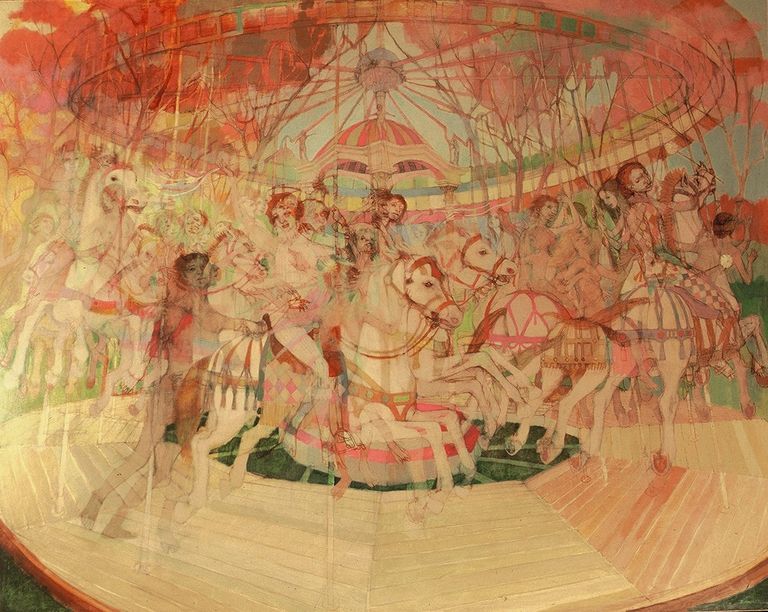
The Carousel 1967